Race Day
On Saturday, I started out at 4am with 825 other souls. I went out running hard but controlled, falling and tearing up my right knee around mile 9, but managed to keep a solid pace despite very busy aid stations. As the sun came up, the route became more exposed and we had two solid climbs (Powerline, Mt Elbert) where everyone was feeling the altitude. I ran out of water once and definitely felt the effects but I was moving forward well.
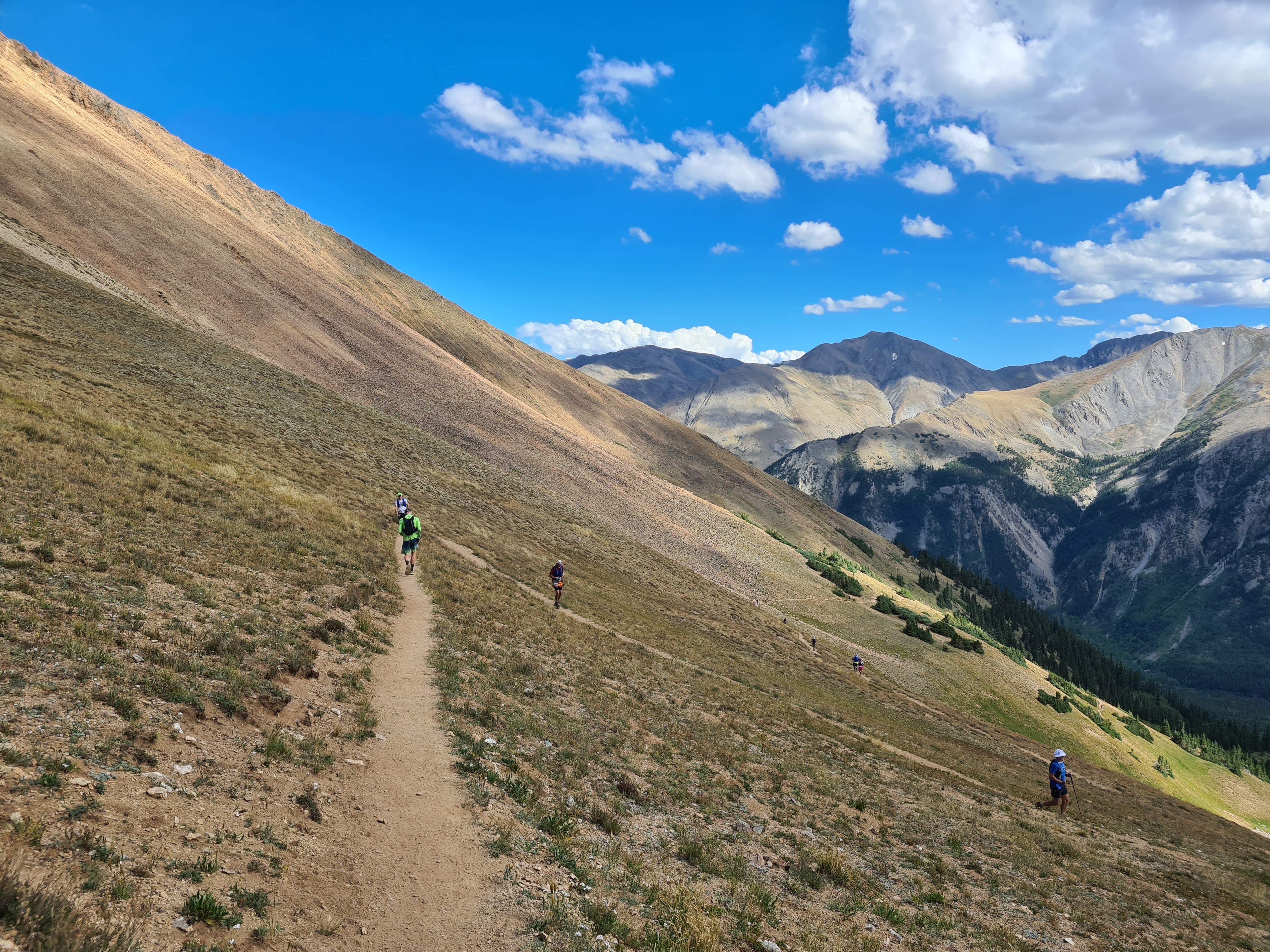
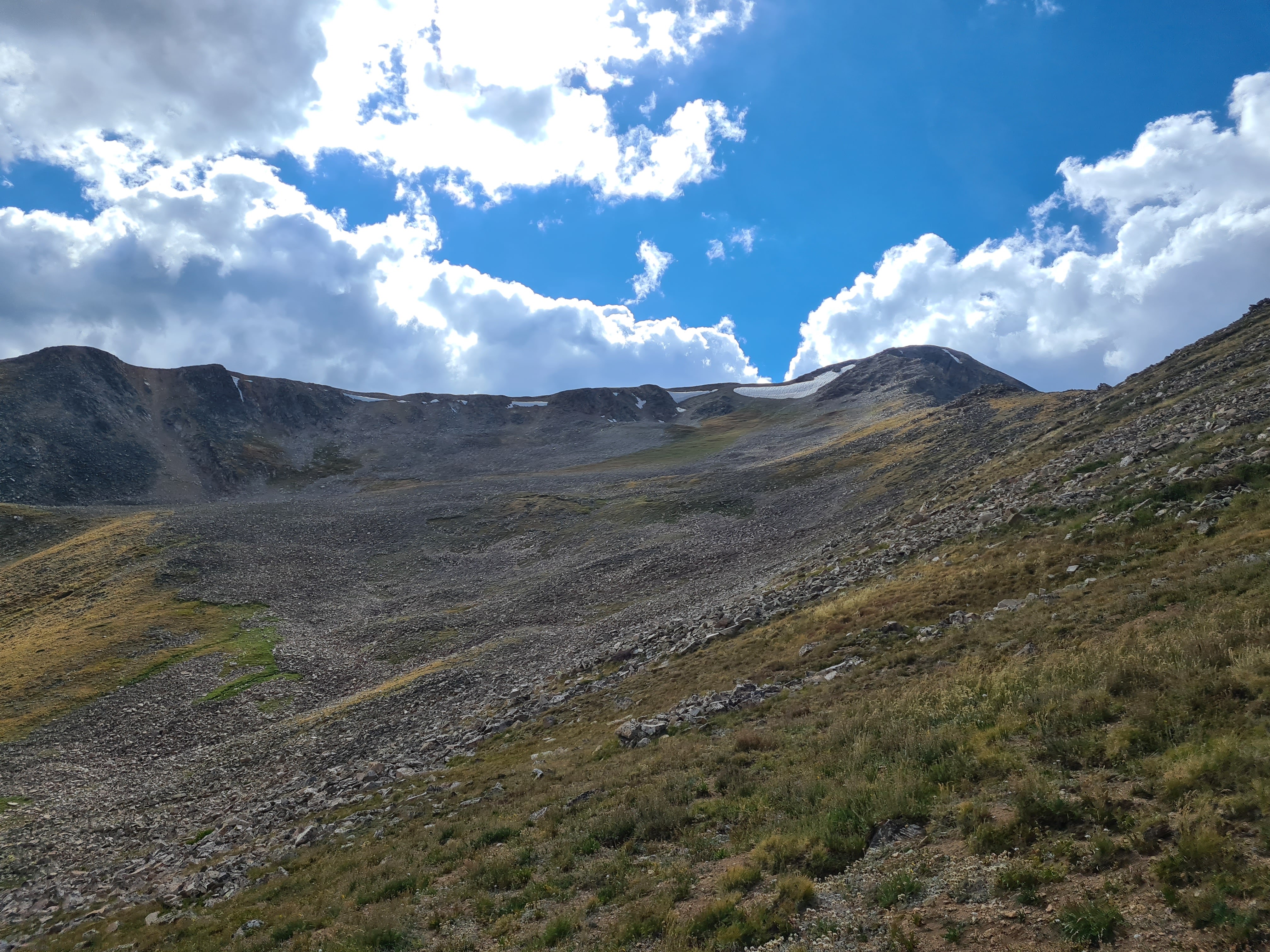
I left Twin Lakes 20 minutes ahead of cutoff and the climb up Hope Pass was wicked hard. I consumed 3 salt tabs early on and knocked back 1.5 L of electrolytes on the ~5 mile climb, successfully fighting off muscle cramping in my triceps, shoulders, and left calf. I had a bit of a nosebleed as I climbed as well, but it was relatively mild. The altitude effects were harsh on the ascent of Hope Pass; I saw people falling over from dizziness and having GI distress just off the trail with their shorts around their ankles.
I made it to Winfield (50 miles/turnaround) with 90 seconds to spare for their arbitrary cutoff. The few remaining aid station staff rushed us through, not bothering to check if we had jackets or headlamps. I arrived at Winfield on pace for a 28-hour finish but while Leadville overall gives 30 hours for the race, they have extremely aggressive cutoffs starting at 12.5 miles, essentially dictating a very rigid pace plan.
I was only allowed time to fill my water bottles and grab a soda to drink on trail before I left the aid station. I grabbed my spare headlamp from my drop bag, with my jacket already in my pack, and headed back the way I’d come, knowing I probably wouldn’t make the Twin Lake return cutoff but wanting to climb the brutal but beautiful Hope Pass again as night fell and make it a full 100k even if they wouldn’t let me do the full 100 miles, finishing on my terms. I’d been training for 4 months straight and was in amazing shape – I wanted to give this effort everything I had to give.
I’d been training for 4 months straight and was in amazing shape – I wanted to give this effort everything I had to give
I had a great struggle back up Hope Pass, sucking wind and passing ~15-20 others – many of whom I stopped to check on as they were in physical distress. One person was struggling down the mountain with a suspected broken ankle, unsure if the Winfield aid station would still be there when he arrived; another was lying on the side of the trail, unable to stand for being dizzy; yet another was sitting with his head between his legs, gasping for air and dry heaving repeatedly.

The wind was blowing 15 MPH and I put on my shell as I broke treeline; I was very worried about a lethargic, seated runner I passed who was wearing only shoes, shorts, and a small waist belt with no shirt or jacket. I did appreciate having other headlamps on the endless journey up the mountain in the dark, even as each headlamp gave me yet more people to worry about.
I took a short break at the Hope Pass aid station for some salty ramen broth and then headed down at a great pace. My legs only felt better as I got lower. I stopped to check on yet more sick runners as I descended, including two different people who were vomiting bile uncontrollably to the point they could barely respond to my questions. The dusty trail was littered with pools of vomit and I tried my best to avoid stepping in it. I also stopped to pass along the limited info I had to ascending crew who were trying to find their runners in the dark on Hope Pass.
I got back to Twin Lakes at 11:30pm, 1.5 hours after the cutoff, having averaged 3.5 MPH on the descent despite the many delays. At Twin Lakes/mile 62.5, I still could have made their 30-hour finish line cutoff averaging only 3.4 MPH – with the highest altitude behind me and very runnable terrain, enthusiastic pacers, a cooler night, and only ~6 miles of climbing in front of me, but Leadville withholds any flexibility. Their cutoff times assume a 20% decrease in pace and distance covered in the second half; my norm is a 2-5% decrease – I’m an endurance hiker at heart.
No one other than my crew was at Twin Lakes waiting for me in the dark, but it was wonderful to see their faces after a long day. It felt very hard to walk away, knowing there were hurt and suffering runners still out there in the dark and no one other than their panicked friends and family seemed to care, but I had to let that fall on the actual responsible party – the race organizers.
Race in Review
I am very proud of my effort and performance on this course under the race’s arbitrary timing restrictions. This year, only 44% of Leadville runners finished the course within their many cutoffs (usually ~50%), partially due to a much hotter day than usual with no rain or afternoon thunderstorms to cool things off. I was proud to be one of 5 nonbinary competitors. I didn’t get any blisters, sunburn, chafing, GI distress, or puking, despite spending less than 30 minutes total stopped across 8 aid stations (less than 4 minutes an aid station). I know my body and used well the skills I’ve acquired over the last decade, doing unsupported efforts in the mountains.
Leadville is… a race that seeks to fail athletes in the name of exclusivity, not a race that seeks to give athletes the best opportunity to succeed.
But the more distance I get from this event, the more anger I feel. Leadville is a difficult course, but their timing format caters only to fast runners, seemingly only seeking elite athletes, registration fees, and attractive headlines while disregarding the average middle/back of pack ultrarunner. It is a race that seeks to fail athletes in the name of exclusivity (e.g., “50% of runners don’t finish”), not a race that seeks to give athletes the best opportunity to succeed.
Cutoffs and Safety
They claimed the cutoff times were for “safety,” but they also had no safety checks in place around required gear for Hope Pass or tracking athletes’ movement once they left Winfield. The only visible tracking used was timing mats, which were removed once the location’s cutoff time was ended. I was completely flabbergasted at the lack of consideration for safety and search & rescue protocols. I wondered why they didn’t use a system like ham radio operators at aid stations to provide a centralized hub of accurate information and athlete tracking. And why on earth did they not continue tracking people until everyone was safely off the mountain, not just finishers? A race is not done until everyone is safe. It epitomized disposability – slower runners were not valued or considered worthy of protection. If the race organizers’ intention is to leave runners fully unsupported who have the misfortune of running out of time between aid stations, they needed to be extremely clear about that.
It epitomized disposability – slower runners were not valued or considered worthy of protection
This event felt more like a road race than an ultramarathon, where they only care for the very quickest runners who will bring the most publicity. Despite me seeing race camera crews at least 5 times, they were always oriented to documenting only the fastest runners who might be competing for the podium. By the time I came through, they had stopped taking photos; I had camera crew tell me I was ‘looking good, runner‘ while their cameras were covered or pointed at the ground. In the end, I had one race photo taken of me as I arrived at Twin Lakes. The last finish (DFL) only has photos from his finish.
The communication on their website, in sparse emails, and in their athlete guide directly contradicted itself; crucial information about crewing was not shared until 18 hours before race start, and only in an unannounced meeting to a select group of people who thought to stay behind. People who had attended the race before knew which rules were rules and which rules they could blatantly ignore with no consequences (such as being able to reserve a crew spot at Twin Lakes on Friday evening), while the rest of us were stuck with the limited information provided to us. It was an “old boys club,” welcoming only a select few.
Aid stations closed down after the cutoffs had passed, even while there were runners still heading for the aid station to end their attempt. When I arrived at Twin Lakes, if I’d been in need of medical attention and didn’t have a crew, I would have been completely stranded and alone in the dark with no cell service. Also, given the remote nature of Leadville and the surrounding area, I was legitimately concerned that if I needed medical attention, I would either be denied outright or receive subpar care due to being visibly queer as well as transgender. Nothing I experienced at the race or around Colorado alleviated or mitigated that; it only highlighted and compounded my risk.
Inclusion Vs. Belonging
Race employees also questioned my gender by email 5 days before the race. Was I really sure I wanted my gender to be registered as nonbinary? When I asked a clarifying question about whether I could complete for men’s or women’s awards while having my gender noted as nonbinary, they responded to my email but flatly did not answer my question. I asked a 2nd time; they did not respond. I’m sure they did not ask the same question of the 815+ people registered as men or women.
At packet pick-up, I was publically questioned about my t-shirt choice in a way that was meant to make me a spectacle. The volunteer openly gaped at my registration’s request for a women’s shirt; he physically stopped another volunteer from handing me my shirt, and loudly demanded of me that I “want a men’s shirt, NOT a women’s shirt, right?!” I stood my ground and firmly told him that I wanted the shirt I had indicated upon registration, which was indeed a women’s shirt. He looked at me with disgust and thrust the shirt at me.
I walked away, thinking it was over. The man who was waiting behind me to register quickly picked up his packet with no trouble, and followed me over to where I was organizing my drop bags. He and his friend came right up to me, invading my personal space, and began questioning my shirt choice again, loudly asking me why I would ever want to wear a women’s shirt – I wanted “a MAN’S SHIRT, RIGHT??” I looked him in the eye coolly and told him that “Naw, this shirt fits nice, but thanks for your concern” channeling as much Alexis-from-Schitt’s-Creek attitude as I could muster. The man grumbled at me but disengaged as his friend pulled him away by the arm, looked uncomfortable with the confrontation. I walked away as quickly as I could without appearing to flee.
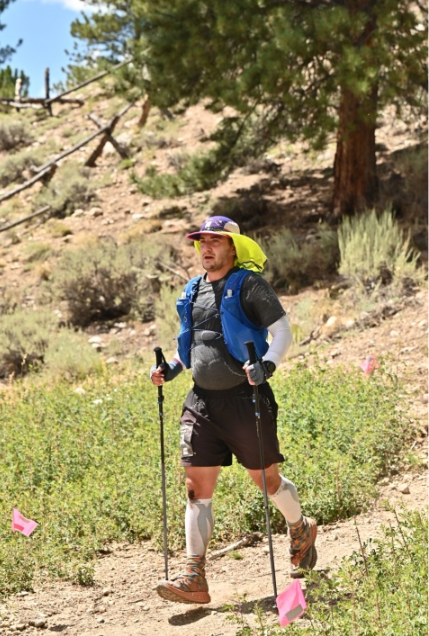
During the race, there were quite a few miles where people grouped together to chat as they ran on smooth roads, finding solace and distraction in each other. I approached more than half a dozen other runners, seeking the same. None of them responded beyond a few sentences at best; they each immediately sought out other people to run and talk with. I clearly saw half of them look at my rainbow wrist band, my painted nails, my purple and pink hat, and my mid-range voice, and withdraw from me. I was left to run the race alone in a pack of 825 people.
This race was an exemplar of why inclusion is not enough – justice and belonging must be intentionally planned for and created
Leadville did not release the race registration list in advance; they only provided the results list afterwards, which is something I’ve never experienced at any race, whether road or trail. There was no way for me to connect with other nonbinary runners beforehand or to see if I would be the only nonbinary runner in a field of 800+ people.
Final Thoughts
I started this race already exhausted and anxious from defending my basic right to exist as I am. I then physically fought to push my pace hard from the start to fit their idea of what a “true” and “successful” ultramarathon runner looks like. I finished proud on my own terms, but in the end, I would have been much happier and safer doing this course as a self-supported or unsupported effort.
This race was an exemplar of why inclusion is not enough – justice and belonging must be intentionally planned for and created. Sure, they ‘welcome’ women and nonbinary people and para athletes, but they have not evaluated who this race is designed for – we are only welcome if we quietly agree to their elitest design, meant for the upper echelon of popular, socially connected, thin, rich, and fast cisgender white men. Allowing us at the event without actually examining and changing the culture and logistics of the race is not equitable – it’s patronizing and exclusionary.
While this race was literally and metaphorically breathtaking, I will not be back. It was not built with any intention of welcoming or imagining success for me. I’m very proud of what I accomplished and how I handled myself, but I’d be lying if I didn’t say that I was deeply, deeply disappointed in this race.
 Transcending Mountains
Thanks for sharing, this was honestly heartbreaking to read. I hope you always remember that you belong everywhere you decide to be. I hope the world can start to change to make everyone always feel that.
LikeLike
Thank you for posting this, I look at your content on instagram and I am inspired by someone else in the community. Your insight is important and valuable for me. Things like this just from the safety perspective are unacceptable but to even have one issue let alone several regarding category or shirt in such a known event is ridiculous! Thank you for putting into words something I (100%) feel would reflect my experience if I decided to do this event.
LikeLike